British Cockapoo Society
  • WELCOME
  • ABOUT US
  • CONTENTS PAGE
    • COCKAPOO INFORMATION
      • Spaniel & Poodle Information
      • F1, F2 Explained
      • Are Cockapoos Hypoallergenic?
      • Do Cockapoos Moult?
      • Cockapoo Coats of many Colours
    • THINKING OF GETTING A COCKAPOO?
    • LOOKING FOR A BREEDER?
      • What is a Puppy Farm
      • Dog breeding legislation
      • How to Find a Good Breeder?
      • Litter-mate Syndrome
    • HEALTH TESTING
      • Eyes Tests
      • Kidney Tests
      • Hip Tests
      • Blood & Enzyme Tests
    • Should My Dog Breed?
    • Spay or Neuter
    • PUPPY CORNER & TRAINING
      • Preparing for your Puppy
      • Early Days Socialisation Training
      • Bedtime Training
      • Using a Crate
      • Leaving puppy alone
      • Toilet Training
      • Teething & Bite Inhibition
    • OBEDIENCE TRAINING
      • Stages of Behaviour
      • Recall Course
        • Get Prepared
        • Week 1 - What's Your Name?
        • Week 2 - Have Fun!
        • Week 3 - Introducing DIstance
        • Week 4 - Off Lead!
        • Week 5 - Keeping Focus
      • Sit
      • Loose Lead Walking
      • Drop
      • Leave
      • How to stop Barking
      • Introducing a Second Dog
    • COCKAPOO CARE & HEALTH
      • What to feed?
      • Grooming & Coat Care
        • Brush & Combs
        • Grooming Cuts
      • Ear Care & Plucking
      • Insurance
      • Summer Care
      • Winter Care
      • Doggy Dangers
    • DOGS, KIDS & SAFETY
      • Doggy Body Language
      • Introducing a new baby
      • Stay Safe with Dogs
    • RAW FEEDING & NATURAL REMEDIES
      • Health Checklist
      • RAW FEEDING INTRODUCTION
        • Raw Feeding Menu
        • Bobby's Story
      • NATURAL REMEDIES
        • Fleas & Worms
        • Eyes
        • Ears
        • Skin
        • Bones
        • Digestive Problems
  • CONTACT US
  • WELCOME
  • ABOUT US
  • CONTENTS PAGE
    • COCKAPOO INFORMATION
      • Spaniel & Poodle Information
      • F1, F2 Explained
      • Are Cockapoos Hypoallergenic?
      • Do Cockapoos Moult?
      • Cockapoo Coats of many Colours
    • THINKING OF GETTING A COCKAPOO?
    • LOOKING FOR A BREEDER?
      • What is a Puppy Farm
      • Dog breeding legislation
      • How to Find a Good Breeder?
      • Litter-mate Syndrome
    • HEALTH TESTING
      • Eyes Tests
      • Kidney Tests
      • Hip Tests
      • Blood & Enzyme Tests
    • Should My Dog Breed?
    • Spay or Neuter
    • PUPPY CORNER & TRAINING
      • Preparing for your Puppy
      • Early Days Socialisation Training
      • Bedtime Training
      • Using a Crate
      • Leaving puppy alone
      • Toilet Training
      • Teething & Bite Inhibition
    • OBEDIENCE TRAINING
      • Stages of Behaviour
      • Recall Course
        • Get Prepared
        • Week 1 - What's Your Name?
        • Week 2 - Have Fun!
        • Week 3 - Introducing DIstance
        • Week 4 - Off Lead!
        • Week 5 - Keeping Focus
      • Sit
      • Loose Lead Walking
      • Drop
      • Leave
      • How to stop Barking
      • Introducing a Second Dog
    • COCKAPOO CARE & HEALTH
      • What to feed?
      • Grooming & Coat Care
        • Brush & Combs
        • Grooming Cuts
      • Ear Care & Plucking
      • Insurance
      • Summer Care
      • Winter Care
      • Doggy Dangers
    • DOGS, KIDS & SAFETY
      • Doggy Body Language
      • Introducing a new baby
      • Stay Safe with Dogs
    • RAW FEEDING & NATURAL REMEDIES
      • Health Checklist
      • RAW FEEDING INTRODUCTION
        • Raw Feeding Menu
        • Bobby's Story
      • NATURAL REMEDIES
        • Fleas & Worms
        • Eyes
        • Ears
        • Skin
        • Bones
        • Digestive Problems
  • CONTACT US
Picture
​The British Cockapoo
Society 


The Club for owners, enthusiasts and ALL recipients of Hearing Dogs

​

WHERE COCKAPOOS COME FIRST!

TRAINING

BASIC TRAINING FROM 8 WEEKS TO ADULT
Picture
There are still some people who feel that the way to train our dogs is to focus on making ourselves their pack leader and that we should behave as the 'Alpha' of the pack (the pack being us, the humans and the dog).
This method of training has been made popular by some television personalities but is also used by some dog trainers around the country. It is unfortunate that these people are not willing to look at more modern methods and keep up to date with changes in dog training techniques, but hold instead to the idea that if it was good enough years ago, it is good enough now.

The British Cockapoo Society strongly supports reward based training techniques and does not endorse or believe in the ‘alpha’ model in any dog training.


This article on the APDT (Association of Pet Dog Training) website debunks the theories of having to use dominant and pack leader methods in dog training, and shows that things like pinning dogs down or giving them scruff shakes can make the dog prone to aggression as they have no other way to defend themselves.
https://apdt.com/resource-center/dominance-and-dog-training/

"Actions such as "alpha rolls" and "scruff shakes" have no basis in fact when studying wolf or dog behaviour, and they only lead to creating unnecessary fear on our dog's part toward us, fear that ultimately can lead to aggression because the frightened dog knows of no other way to protect itself other than using its teeth. We all owe it to our dogs to see the world from their point of view in order to create a more harmonious relationship. Whether we are looking at a dog or a wolf, actions such as grabbing a dog and forcing it into a down, growling at the dog, and other aggressive behaviours directed toward the animal will only lead to the animal developing a "fight-or-flight" response where the animal fears for its life. In this situation, the dog will either freeze out of fear, flee far away from the threatening animal or person if an opportunity presents itself to get away, or, fight to save itself. When we engage in such behaviours toward our dogs, we are not telling the dog we are "boss," instead we are telling the dog we are dangerous creatures to be avoided or fought off. There is no "dominance" in these scenarios—only terror and the instinct to defend oneself against attack"

So what is the best way to train a dog?
APDT advocates working with your dog to build a happy relationship, one where caring and partnership is at the forefront rather than intimidation and fear. 
This does not mean that you, the dog owner can't be the leader, but you achieve that in a non-confrontational way. This is the training method that BSC endorses.

In this section we will build up a guide on how to teach your dog basic obedience skills.  It is important to remember though that training does not happen overnight, it does need patience and repeating for your dog to understand what you want it to do, so be prepared to devote some time to it.

SOCIALISATION
From the day you pick up your puppy, you, the owner, become a teacher. Many problems can be avoided by realising this and ensuring that early socialisation and training takes place in a fun and happy way. 

Your puppy wont know what you want it to do unless you show it.

Socialisation is vital and should be started by your breeder who should raise the pup in a home environment, getting it used to the hustle and bustle, sights and sounds of a normal home life. When you take the pup home, your role in the process then starts, even though your puppy is not officially allowed out because their inoculations are not fully effective.  You can see our advice for puppy socialisation on the link below. 
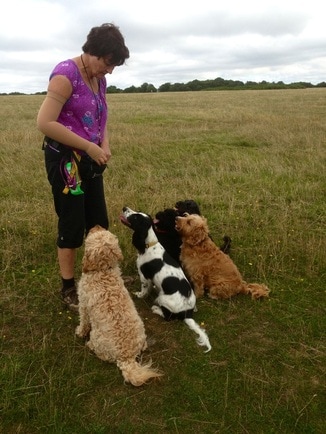
As your puppy grows into a mature dog you can continue his training by introducing games and tricks.  Cockapoos are bright and intelligent dogs who love to learn, so reward based enrichment is vital for a happy dog.

CLICK THE PICTURES BELOW FOR TRAINING TIPS 

Picture
STAGES 0F BEHAVIOUR
Picture
RECALL COURSE
Picture
SIT
Picture
LOOSE LEAD WALKING
Picture
DROP
Picture
LEAVE
Picture
HOW TO STOP BARKING
Picture
INTRODUCING A SECOND DOG
cockapoo care
contents page
CONTENTS PAGE
​THINKING OF GETTING A COCKAPOO?
COCKAPOO INFORMATION
LOOKING FOR A BREEDER
​
SHOULD MY DOGS BREED?

HEALTH TESTING
​
COCKAPOO CARE

COAT COLOURS
PUPPY CORNER
TRAINING
DOGS, KIDS & SAFETY
NATURAL REMEDIES

RAW FEEDING


ABOUT US

​


CONTACT US

BRITISH COCKAPOO SOCIETY© COPYRIGHT2021
  • WELCOME
  • ABOUT US
  • CONTENTS PAGE
    • COCKAPOO INFORMATION
      • Spaniel & Poodle Information
      • F1, F2 Explained
      • Are Cockapoos Hypoallergenic?
      • Do Cockapoos Moult?
      • Cockapoo Coats of many Colours
    • THINKING OF GETTING A COCKAPOO?
    • LOOKING FOR A BREEDER?
      • What is a Puppy Farm
      • Dog breeding legislation
      • How to Find a Good Breeder?
      • Litter-mate Syndrome
    • HEALTH TESTING
      • Eyes Tests
      • Kidney Tests
      • Hip Tests
      • Blood & Enzyme Tests
    • Should My Dog Breed?
    • Spay or Neuter
    • PUPPY CORNER & TRAINING
      • Preparing for your Puppy
      • Early Days Socialisation Training
      • Bedtime Training
      • Using a Crate
      • Leaving puppy alone
      • Toilet Training
      • Teething & Bite Inhibition
    • OBEDIENCE TRAINING
      • Stages of Behaviour
      • Recall Course
        • Get Prepared
        • Week 1 - What's Your Name?
        • Week 2 - Have Fun!
        • Week 3 - Introducing DIstance
        • Week 4 - Off Lead!
        • Week 5 - Keeping Focus
      • Sit
      • Loose Lead Walking
      • Drop
      • Leave
      • How to stop Barking
      • Introducing a Second Dog
    • COCKAPOO CARE & HEALTH
      • What to feed?
      • Grooming & Coat Care
        • Brush & Combs
        • Grooming Cuts
      • Ear Care & Plucking
      • Insurance
      • Summer Care
      • Winter Care
      • Doggy Dangers
    • DOGS, KIDS & SAFETY
      • Doggy Body Language
      • Introducing a new baby
      • Stay Safe with Dogs
    • RAW FEEDING & NATURAL REMEDIES
      • Health Checklist
      • RAW FEEDING INTRODUCTION
        • Raw Feeding Menu
        • Bobby's Story
      • NATURAL REMEDIES
        • Fleas & Worms
        • Eyes
        • Ears
        • Skin
        • Bones
        • Digestive Problems
  • CONTACT US